Baco blanc: the only hybrid admitted in a French AOC
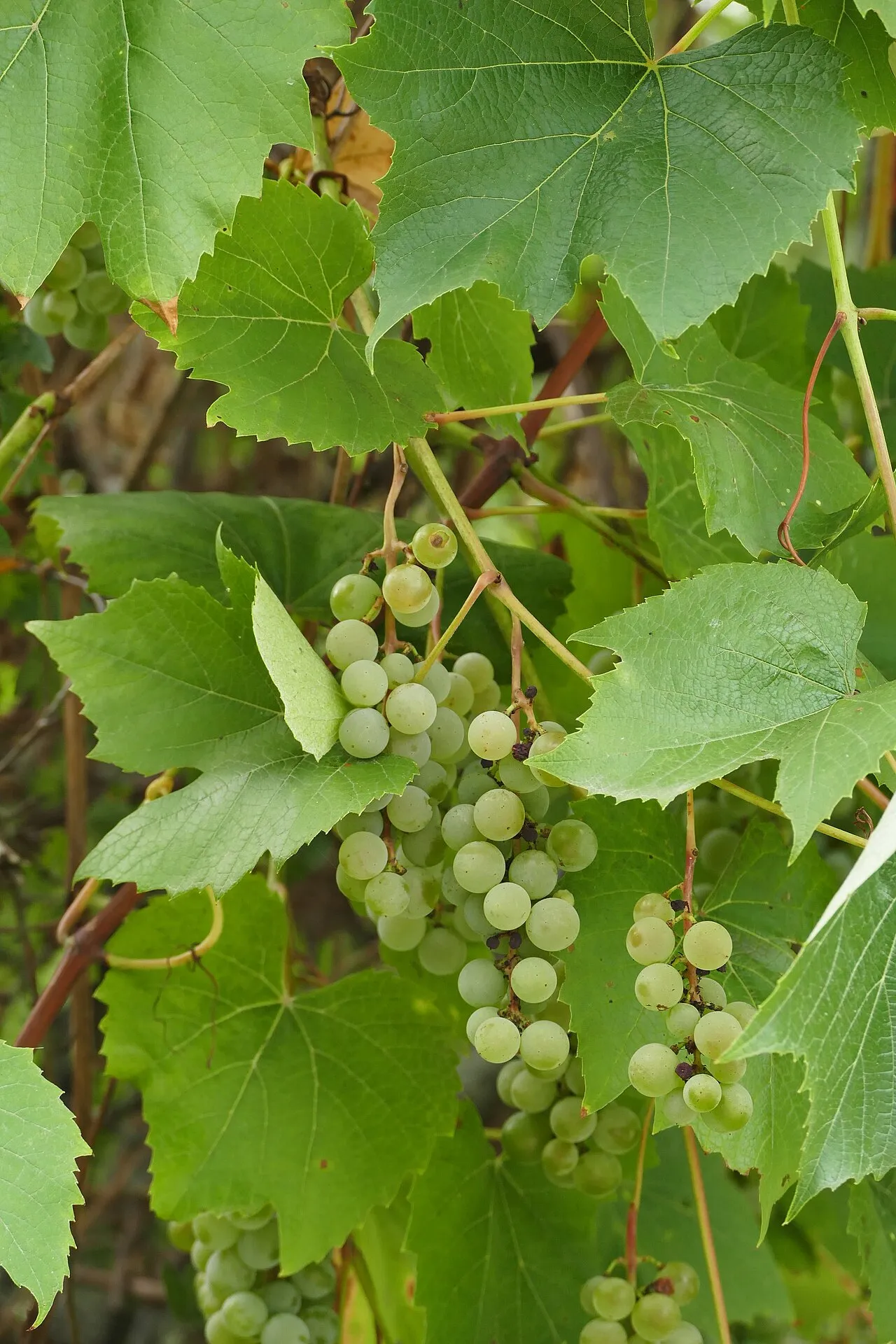
Profile: Baco blanc
| Berry colour | White grape (B) |
|---|---|
| Species / status | Direct producer hybrid |
| Origin | France, Landes (Bélus) |
| Parentage | Folle blanche × Noah (bred by François Baco in 1898, parentage verified genetically) |
| Synonyms | Baco 22A, Maurice Baco, Piquepoul de pays |
| French regions | South-West France |
| Grown in | France |
| Typical aromas | ripe fruits (aged brandy), round and smooth notes |
| Wine style | Essentially distilled for armagnac: round, smooth and fruity brandies after long ageing. |
| Food pairings | end of meal (armagnac), prune desserts, foie gras (young armagnac) |
| Identifiers | VIVC no. 868, Wikidata Q302429 |
Origin: the work of a Landes schoolteacher
Baco blanc was bred in 1898 by François Baco, a schoolteacher in Bélus, in the Landes, and a passionate hybridiser. He first named it Maurice Baco 22A, after his son’s first name, hence the name baco 22A still used in Armagnac.
It comes from a cross between folle blanche, the historic grape of the brandies of Gascony and the Charentes, and noah, a white American hybrid. This parentage has been verified by genetic analysis.
In the vineyard
Baco blanc is very vigorous and very fertile, especially when trained as a two-tier cordon. It ripens about 20 days after chasselas. It is not free of sensitivities, however: it dislikes wind, downy mildew, powdery mildew, flavescence dorée and calcareous soils. Susceptible to phylloxera, it must be grafted, except in the sables fauves (tawny sands) of Bas-Armagnac, where the aphid cannot thrive. It is on these sandy terroirs that it performs best.
A hybrid in an AOC: the Armagnac exception
Baco blanc is the only direct-producer hybrid allowed in an AOC in France. This exception stems from its history: it was already among the appellation’s grapes when the appellation was recognised in 1936.
| Date | Step |
|---|---|
| 1898 | Cross of folle blanche × noah by François Baco |
| 1936 | Baco is among the grapes of the armagnac AOC |
| 1992 | The INAO plans the gradual removal of baco vines |
| 2005 | Revision of the specification: baco is retained permanently |
| Today | One of the four main grapes of armagnac |
According to the trade body, baco was due to disappear around 2010-2011; the revision of the specification in 2005 secured its place for the long term. This status has nothing to do with that of the six hybrids banned in 1934-1935 (noah, clinton, isabelle, jacquez, othello, herbemont), described in the guide on the hybrids banned in 1934.
Armagnac and its grapes
The appellation allows ten grapes, but four dominate:
- ugni blanc;
- baco 22A;
- folle blanche;
- colombard.
The other six (clairette de Gascogne, jurançon blanc, plant de graisse, meslier Saint-François, white and pink mauzac) have almost disappeared. The specification is a precise document, whose reading is explained in the guide reading an AOC specification.
Baco brandy
Made into wine on its own, baco blanc gives a wine with a foxy taste, inherited from noah, which explains why it is almost entirely distilled. After long barrel ageing, baco brandy develops fruity aromas, roundness and a smooth texture, appreciated in blends and in a few cuvées made from baco alone. It expresses itself particularly on the tawny sands of Bas-Armagnac.
Plantings
In 2004, baco blanc covered about 2,100 hectares in France, essentially in the armagnac zone. It is thus one of the few first-generation hybrids still grown on a significant scale in the country. See the grapes of the South-West, the forgotten grapes of the South-West and the page on direct-producer hybrids.
Frequently asked questions
Is baco blanc allowed in an AOC?
Yes, in the armagnac AOC. It is the only direct-producer hybrid admitted in an appellation of origin in France. The INAO had planned its gradual disappearance, but its retention was confirmed when the armagnac specification was revised in 2005.
Who are the parents of baco blanc?
Baco blanc comes from a cross made in 1898 by François Baco between folle blanche, a traditional grape of armagnac and cognac, and noah, an American hybrid. This parentage has been verified by genetic analysis.
Why is baco blanc distilled rather than made into wine?
Its wine has the "foxy" taste inherited from noah, which is little appreciated in still wine. Distillation and long barrel ageing erase this character and reveal a round, fruity brandy, much appreciated in Bas-Armagnac.
What is the difference between baco blanc and folle blanche?
Folle blanche is a traditional vinifera grape, very susceptible to grey rot and difficult to grow. Baco blanc, its hybrid descendant, is hardier on the sands of Bas-Armagnac and for a long time served to replace it for producing brandies.
Related grapes
- Noah (white, United States, Illinois)
- Ugni blanc (white, Italy, central Italy)
- Colombard (white, France, Charentes)
- Mauzac (white, France, South-West (Gaillac, Limoux))
- Gros manseng (white, France, Pyrenean foothills (Béarn, Basque Country))
- Isabella (black, United States, South Carolina (probable origin))